How to Choose Drupal or WordPress for Growth
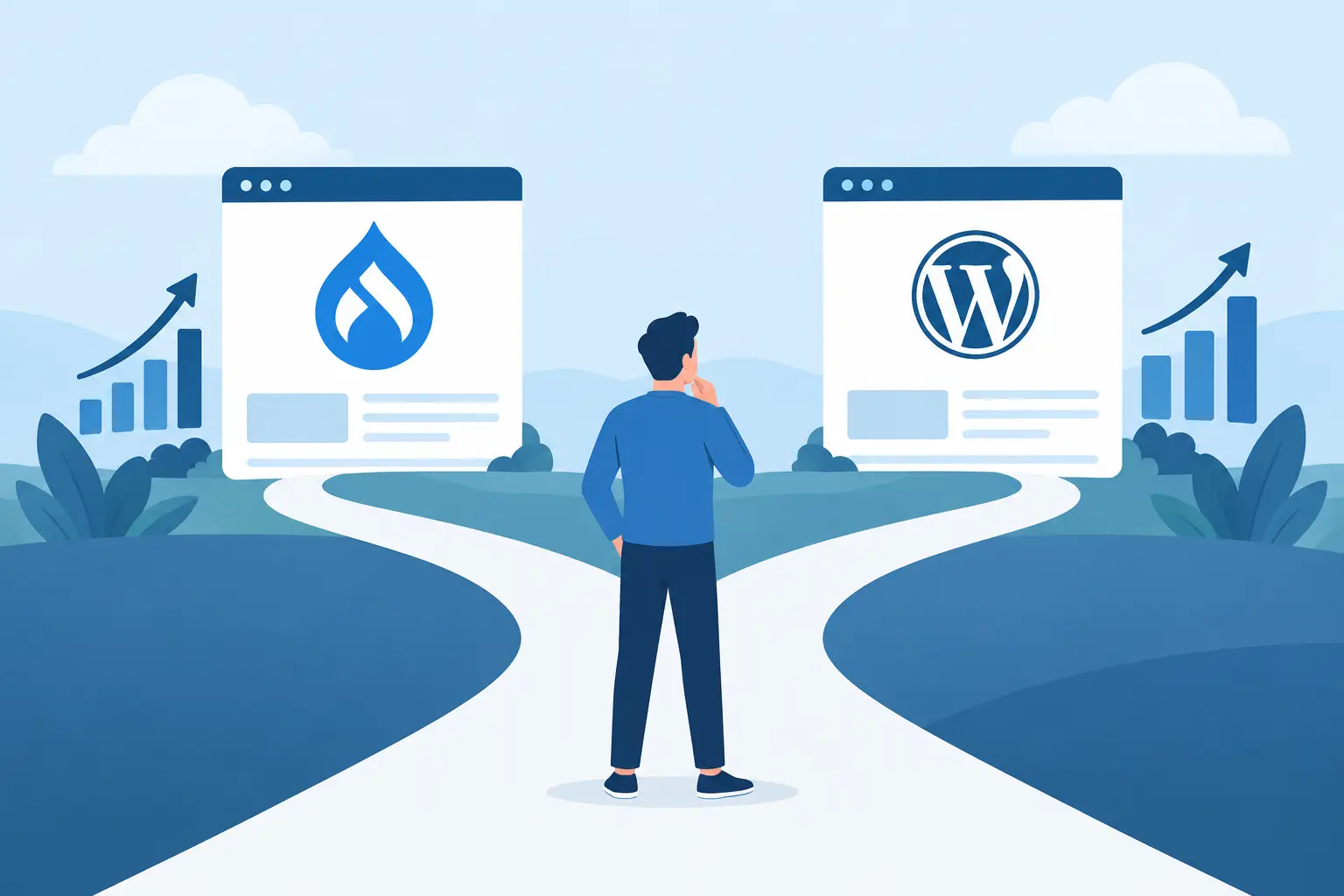
A website platform decision becomes expensive when it is treated like a design preference. The real question behind how to choose Drupal or WordPress is not which platform has the better name recognition. It is which one can support your brand, content operations, lead generation, integrations, and future requirements without forcing your business into workarounds six months after launch.
Both platforms can power high-performing, search-ready websites. Both can be customized well. Both can also become slow, insecure, difficult-to-manage messes when the strategy, architecture, and development standards are weak. Strong marketing cannot save a weak website foundation, and a popular platform cannot compensate for vague requirements or template-level thinking.
Start With the Business System, Not the CMS
Your website is not a standalone brochure. It is the center of a larger growth system: brand positioning, search visibility, local presence, content, sales enablement, advertising landing pages, analytics, and conversion tracking. Before comparing features, define what the website must do for the business over the next three to five years.
A professional services firm may need thought leadership, service pages by industry, case studies, recruiting content, and lead routing to a CRM. A manufacturer may need an extensive product catalog, dealer resources, technical documents, gated materials, and role-based access for multiple teams. A local service company may need location pages, estimate requests, reviews, call tracking, and fast campaign landing pages.
Those are different operating models. The platform should fit the model, not the other way around.
Ask practical questions early. How many people will manage content? Will different departments need different permissions? Are there hundreds or thousands of pages, products, locations, or documents? Does the site need to connect to a CRM, ERP, member portal, or proprietary data source? Will content need to be reused across multiple audiences, regions, or channels?
Your answers will reveal whether you need WordPress simplicity, Drupal structure, or a more specialized modern-stack approach.
Choose WordPress When Speed and Editorial Flexibility Matter Most
WordPress is often the right choice for businesses that need a polished, custom marketing website with an intuitive content publishing experience. It is particularly effective for organizations that want their marketing team to publish articles, update services, build campaign pages, manage case studies, and keep the site current without depending on developers for routine changes.
That does not mean WordPress should mean an off-the-shelf theme and a pile of plugins. A custom WordPress implementation can use a disciplined design system, flexible content components, performance-conscious development, and carefully selected integrations. The difference is significant. A template site creates visual sameness and technical compromise. A well-built WordPress site gives marketing teams speed without sacrificing brand distinction.
WordPress is usually a strong fit when your site has a clear marketing focus, a manageable content model, and a team that benefits from straightforward administration. It can support SEO, e-commerce, lead generation, multilingual content, and sophisticated integrations. Its enormous ecosystem also means many common needs can be addressed efficiently.
The trade-off is governance. WordPress is easy to extend, which makes it easy to overextend. Too many plugins, poorly vetted themes, inconsistent development practices, and neglected updates can create security exposure and performance problems. If WordPress is your choice, your agency or internal team needs clear standards for development, plugin selection, backups, security monitoring, testing, and ongoing maintenance.
Choose Drupal When Complexity Is a Real Requirement
Drupal is built for organizations that need more structured content, granular permissions, complex workflows, and deeper control over how data is managed and displayed. It is a serious platform for serious requirements, especially when a website is becoming a business application rather than simply a marketing destination.
Drupal often makes sense for organizations with large and interconnected content libraries. Think universities, associations, healthcare organizations, enterprise B2B companies, government-adjacent entities, manufacturers with extensive technical resources, or businesses operating multiple sites and brands. Its content architecture can model complex relationships cleanly: a product connected to specifications, industries, resources, locations, distributors, and related services, for example.
Permissions are another decisive advantage. If contributors, editors, reviewers, regional managers, members, or administrators all need different levels of access, Drupal provides the control to establish a disciplined publishing environment. It also handles structured workflows well when content approval, compliance review, and publishing accountability matter.
The trade-off is that Drupal typically requires more planning and more technical expertise. It is not the right platform simply because it sounds enterprise-grade. If your primary need is a focused 30-page marketing site that a small team updates occasionally, Drupal may add unnecessary complexity and cost. But if your requirements demand structured data, sophisticated access control, multisite management, or custom integrations, Drupal can prevent the kind of future rebuild that happens when a simpler platform is stretched too far.
How to Choose Drupal or WordPress Based on Content
Content is where many platform decisions become clear. Do not ask only, “Can we add blog posts?” Both platforms can do that. Ask how your content needs to be created, governed, reused, found, and measured.
WordPress works well when pages and posts are largely independent marketing assets. Your team may need flexible page sections, editorial publishing, resource libraries, campaign landing pages, and standard taxonomies. With a smart content strategy and clean templates, this model is powerful for many growing businesses.
Drupal becomes more compelling when content has complex relationships and must remain consistent at scale. A business with hundreds of products, dozens of locations, multiple audience segments, and regulated resources may need structured fields and rules that prevent content from becoming inconsistent. Drupal can turn a sprawling content operation into a controlled system.
This is not a contest between “simple” and “advanced.” It is about choosing the amount of structure your business actually needs. Too little structure creates chaos. Too much structure creates friction for the people responsible for keeping the website useful.
Evaluate Security, Maintenance, and Ownership Honestly
Security is not a platform checkbox. It is an operating discipline. Both Drupal and WordPress require regular updates, strong hosting, access controls, backups, monitoring, and a clear maintenance process. A neglected site is a business risk regardless of the CMS behind it.
Drupal has a reputation for security-conscious, complex implementations, partly because of its strengths in permissions and enterprise governance. WordPress is frequently targeted because it powers so many websites, but a professionally developed and maintained WordPress site can be highly secure. The greater risk is usually poor implementation: abandoned plugins, weak credentials, cheap hosting, and no one accountable for updates.
Ownership matters, too. Your team should understand what it takes to maintain the site after launch. Who will publish content? Who approves changes? Who monitors performance? Who responds when a form breaks or a software update affects functionality? The best platform is one your organization can support with confidence, either internally or through an accountable partner.
Do Not Let Design or Plugins Make the Decision
A common mistake is choosing WordPress because someone saw a theme they liked, or choosing Drupal because a developer prefers it. Neither is a business case. Great design can be built on either platform. Poor design can be built on either platform, too.
The same is true of plugins and modules. A long feature list is not a strategy. Every add-on introduces a dependency that must be evaluated, maintained, and tested. The goal is not to install the most tools. The goal is to build the fewest moving parts necessary to produce a fast, distinctive, conversion-focused experience.
No Templates is not just an aesthetic position. It is a performance position. A custom design system allows your website to reflect what makes your business credible, organize information around buyer intent, and guide visitors toward meaningful next steps. That foundation matters more than the visual demo attached to a theme marketplace listing.
Make the Decision Through a Requirements Workshop
Before committing, bring leadership, marketing, sales, operations, and technical stakeholders into the same conversation. Document the website's primary business goals, audiences, content types, required integrations, approval workflows, reporting needs, and expected growth. Rank each requirement by business impact rather than by who requested it most recently.
Then test the platform recommendation against real scenarios. Can your marketing team launch a paid campaign page quickly? Can sales find and share the right resources? Can a regional manager update location information without affecting the main site? Can the site pass lead data into the CRM with source attribution intact? Can your team measure calls, form submissions, rankings, engagement, and conversion paths?
That exercise is far more useful than reading generic “Drupal versus WordPress” comparisons. It exposes the decisions that affect cost, speed, accountability, and long-term value.
The right CMS should make your next stage of growth easier, not simply make launch day possible. Choose the platform that gives your business the right level of control, supports a brand experience competitors cannot copy, and leaves room for the work that matters after launch: earning attention, building trust, and turning qualified visitors into opportunities.

