How to Integrate Website Marketing Channels
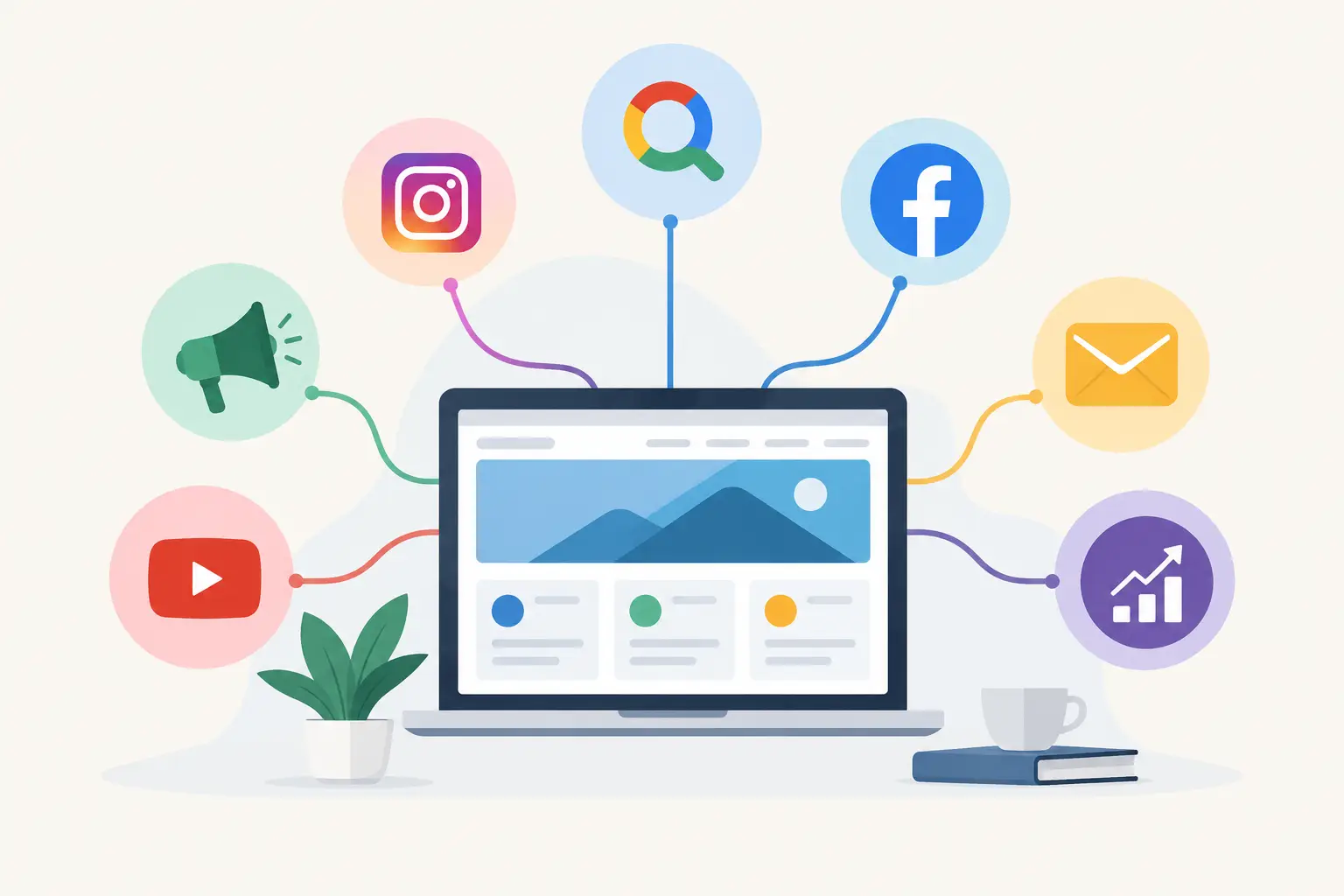
A business can spend heavily on Google Ads, SEO, email, trade shows, and social media and still get disappointing results for one simple reason: every channel sends people to a website that does not carry the conversation forward. Knowing how to integrate website marketing channels means treating the website as the working center of your marketing, not the place prospects happen to land after everything else is finished.
Strong marketing cannot save a weak website. But a well-built website can make every qualified marketing visit more useful by clarifying the offer, proving credibility, answering objections, and giving visitors a practical next step.
Start With the Website, Not the Channel List
Channel integration is often mistaken for a tracking exercise. Tracking matters, but it comes later. The first question is whether your website gives all campaigns a credible place to send people.
A paid ad may promise emergency HVAC service, specialized government contracting support, or a consultation for a medical procedure. The destination page should immediately confirm that promise. It should not force visitors through a generic homepage full of broad claims, stock imagery, and several unrelated calls to action.
This does not mean every campaign needs a separate microsite. For many established businesses, a focused service page, location page, or campaign landing page is enough. What matters is message match: the search term, ad, email subject line, Google Business Profile listing, or sales presentation should lead to a page that continues the same story.
Your website also needs to establish the brand standard across channels. When an ad looks polished but lands on an outdated template site, trust drops. When an email promotes a sophisticated service but the linked page is thin and difficult to use on a phone, the campaign has a conversion problem before sales has a chance to respond.
Build One Clear Marketing Architecture
Integrated marketing works best when every channel has a defined job. SEO may capture high-intent searches. Paid search can support competitive terms or urgent needs. Email can nurture prospects who are not ready to act. Local listings can help nearby buyers compare providers. Sales outreach can bring known prospects back to relevant proof and service information.
The website connects those activities through a clear content architecture. At minimum, most businesses need a strong homepage, core service pages, industry or audience pages where appropriate, proof-oriented content, location information when local relevance matters, and conversion paths that fit the buying process.
For a professional services firm, that may mean service pages supported by team credentials, process explanations, case examples, and a consultation request. For a specialty healthcare practice, visitors may need procedure pages, physician credentials, patient resources, and clear appointment options. For a B2B manufacturer or contractor, buyers may need capabilities, technical details, certifications, project experience, and an easy way to start a qualified conversation.
The structure should reflect how people make decisions, not how your internal departments are organized. If a visitor has to understand your company chart to find the right service, the architecture needs work.
Use Consistent Positioning, Not Identical Copy
Consistency does not mean repeating the same headline everywhere. A Google search ad has limited space and serves immediate intent. An email can provide more context. A LinkedIn post may lead with a useful point of view. A sales representative may focus on a prospect's specific business problem.
All of them should reinforce the same positioning: who you help, what problem you solve, why your approach is credible, and what makes your company a better fit. The website is where that positioning receives its full explanation.
This is also where generic AI-written content often causes trouble. AI can help teams research questions, organize ideas, and accelerate drafts. But pages built from generic language tend to sound like every competitor. They rarely convey the judgment, process, visual quality, and real-world experience that make a serious business credible. No AI-clone design. No filler copy that could belong to anyone.
Connect Each Channel to the Right Page
The practical side of how to integrate website marketing channels is mapping each channel and campaign to its best destination. Do not default every link to the homepage.
Search engine optimization should generally point to the most relevant permanent page. Someone searching for commercial window film installation should reach that service, not a general page about a company that offers ten unrelated services. Paid campaigns can use focused landing pages when the offer, audience, or measurement needs differ from the main site experience.
Email deserves similar care. A newsletter about a new service should link to a page that explains the service and its business value, rather than asking readers to hunt through navigation. If the email is aimed at existing clients, the destination might be a resource page or an upgrade path rather than a new-client sales page.
Google Business Profile and local SEO require a slightly different approach. A business with multiple offices or service areas needs accurate location details, consistent contact information, useful local pages where justified, and a website that makes service availability clear. Creating dozens of near-duplicate city pages is not a sound substitute for actual local relevance.
Social channels often sit higher in the decision process. They can send visitors to useful educational content, portfolio examples, a strong homepage, or a campaign page. The right choice depends on audience awareness. Asking a cold visitor to complete a long consultation form may be premature; asking an urgent searcher to read three articles may be equally unhelpful.
Make Conversion Paths Match the Sale
A single "Contact Us" button is not a conversion strategy. It is useful, but businesses should offer next steps that match the value and complexity of the decision.
A low-friction action may be appropriate for a visitor exploring options: view project examples, check service areas, download a guide, or schedule an introductory call. A higher-intent visitor may be ready to request an estimate, submit project details, call a location, or book an appointment.
The key is restraint. Too many competing calls to action create hesitation. A page should have one primary action and, when needed, a logical secondary action for visitors who are interested but not ready to speak with sales.
Forms should collect enough information to qualify a request without turning into an obstacle course. For a high-value B2B project, asking about timeline, budget range, and project type can save time. For a local service call, name, contact information, service need, and location may be sufficient. The right form depends on the sales process, not a generic conversion-rate rule.
Measure the Full Path, Not Just Website Traffic
Traffic reports can create a false sense of progress. A campaign is only useful if it produces meaningful business activity: qualified calls, form submissions, booked appointments, proposal requests, sales opportunities, or revenue where tracking is available.
Set up consistent source tracking for campaigns, then connect website actions to the outcomes your business actually values. Call tracking can help distinguish calls from paid search, organic search, local listings, and other campaigns. Form tracking should identify the page and source that generated the inquiry. Analytics can show drop-off points, while heatmaps and session analysis may reveal usability problems that basic reports cannot.
Do not overread the data. A low-volume B2B site may generate only a few serious opportunities each month, making short-term channel comparisons unreliable. A local service company may see more immediate volume but still need to distinguish price shoppers from profitable work. Review patterns over a meaningful period and combine data with feedback from the people who answer the phone and handle leads.
Create a Shared Operating Rhythm
Integration fails when the website team, advertising team, SEO provider, and sales staff work from separate assumptions. Someone changes an offer in ads, but the landing page still describes the old offer. Sales hears the same objection repeatedly, but no one updates the relevant page. SEO brings in traffic for questions the website answers poorly.
A practical monthly review can prevent much of this. Look at campaign changes, new service priorities, lead quality, top landing pages, search demand, technical issues, and customer questions. Decide what should be improved next. Sometimes that means a new page or campaign. Often it means strengthening the pages you already have.
This is why a website should be built to evolve. A custom WordPress or Drupal website with a thoughtful design system can support ongoing content, design, and conversion improvements without requiring a complete rebuild every few years. The right platform depends on governance, complexity, integrations, content volume, security needs, and internal resources. WordPress is an excellent fit for many marketing-driven businesses; Drupal can make more sense for organizations with more complex content models, permissions, or operational requirements.
The objective is not to be present in every channel. It is to make the channels that matter work together around a website that earns attention and makes the next step clear. Start with the path your best prospects already take, identify where the experience breaks, and improve that connection first.

