A Website Redesign That Improves Marketing Results
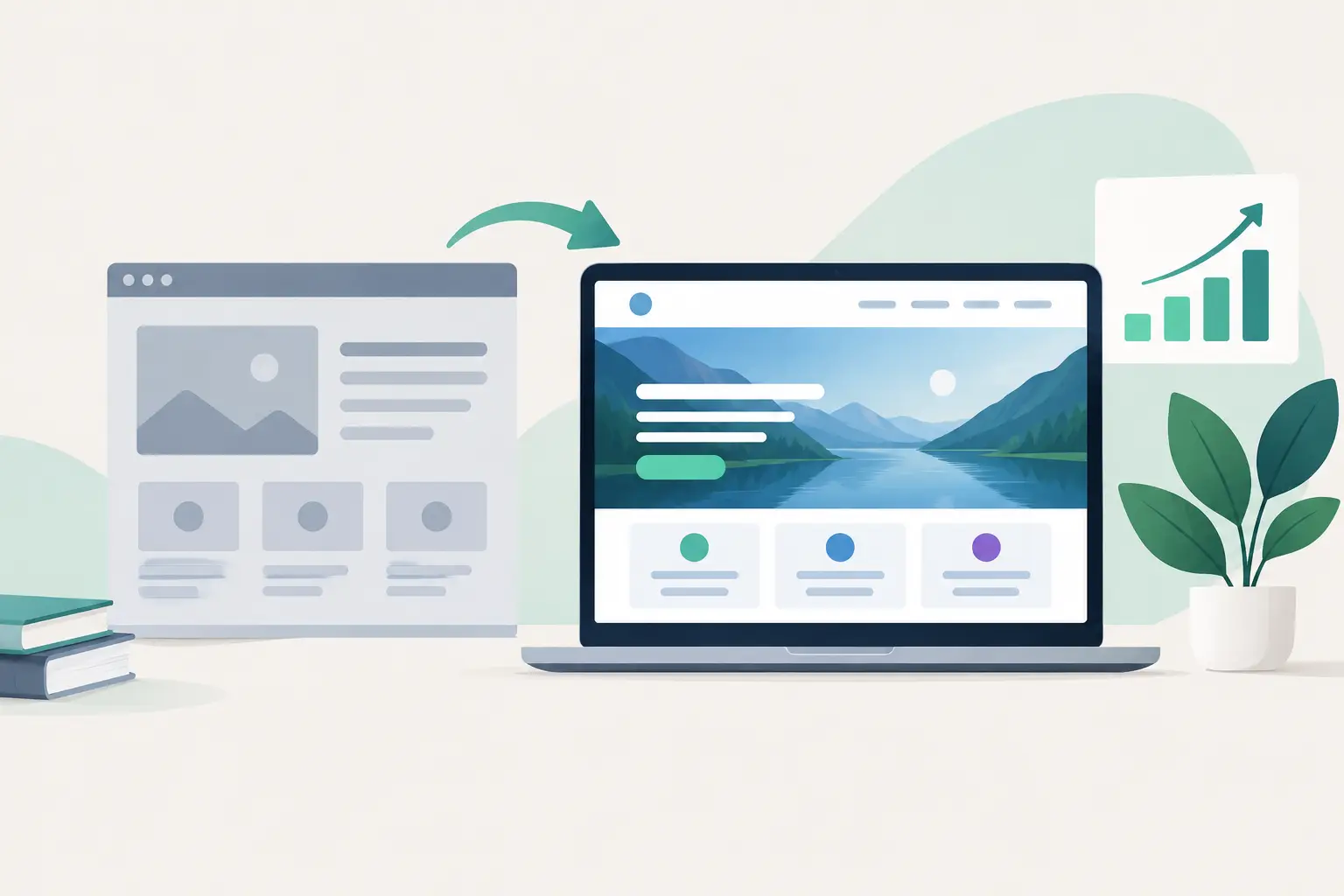
A website redesign is not primarily a design project. It is a business decision about how your company presents itself, earns trust, supports sales, and gets more value from every marketing dollar. If the new site looks better but still buries key services, confuses prospects, loads poorly, or gives advertising visitors no clear next step, it has not solved the real problem.
For established businesses, the best redesigns begin with diagnosis, not a gallery of attractive websites. You need to understand what is failing, what is still valuable, and what should change first.
Start a Website Redesign With Business Problems
A dated visual style may be the most obvious issue, but it is rarely the only one. Prospects notice when a site feels generic, difficult to navigate, or inconsistent with the quality of the company behind it. In professional services, healthcare, B2B, construction, and local service businesses, that impression affects whether someone calls, completes a form, requests a proposal, or moves on to a competitor.
Ask direct questions before discussing colors, fonts, or platform preferences. Can a first-time visitor tell what you do and who you serve within a few seconds? Does the homepage make a credible case for choosing your company? Are your most valuable services easy to find? Are calls, forms, and qualified leads being tracked? Can your marketing team update useful content without creating a mess?
The answers identify the scope. Sometimes the right answer is a complete rebuild. Sometimes it is a homepage-first redesign, a clearer content structure, and prioritized improvements to the service pages that matter most. Rebuilding every page simply because the homepage is old can waste budget and delay improvements that should happen now.
A practical website audit should review brand presentation, user paths, mobile usability, page speed, analytics, conversion tracking, content quality, technical health, and organic search performance. It should also examine how the website supports paid advertising, email, sales outreach, recruiting, and local visibility. Strong marketing cannot save a weak website. But a better site also needs a marketing plan to bring the right audience to it.
What a Website Redesign Should Actually Improve
A successful redesign makes the company easier to understand and easier to choose. That requires more than replacing an old template with a newer one.
Brand credibility
Your website is often the first substantial interaction a prospective customer has with your business. Generic layouts, stock-heavy visuals, vague copy, and inconsistent page design make capable companies look interchangeable. A custom design system creates a more recognizable experience while giving the team useful rules for page layouts, typography, photography, calls to action, and content modules.
Custom does not mean decorative for its own sake. It means the design reflects your company, audience, offerings, and buying process. A government contractor may need clearer qualifications and capabilities. A veterinary hospital may need to make services, locations, appointments, and care philosophy immediately accessible. A technology firm may need to explain a complex offering without sounding like every other software company.
Usability and content structure
Most visitors do not read a website from top to bottom. They scan for evidence that they are in the right place, then look for the next useful detail. The page structure should support that behavior with clear headlines, logical navigation, focused service pages, useful proof points, and straightforward next actions.
This is where many redesigns fail. They carry old content into a new visual shell, preserving cluttered navigation and vague messaging. Better design cannot compensate for pages that say little, repeat themselves, or answer the wrong questions.
Content strategy should decide what each key page must accomplish. A service page may need to explain the problem, the approach, relevant differentiators, the process, and how to start a conversation. A location page may need accurate local information and service relevance, not a thin city name swapped into the same paragraph.
Lead generation and measurement
Not every visitor is ready to contact you immediately. Some need to compare options, review capabilities, or share information internally. Your website should give them useful paths forward without turning every page into a wall of calls to action.
For high-intent visitors, the next step should be obvious. That may be a consultation request, an estimate form, a phone call, an appointment request, or a conversation with sales. Forms should ask for enough information to qualify the inquiry without creating unnecessary friction.
Measurement matters just as much. Configure analytics, form tracking, call tracking where appropriate, and conversion reporting before launch. Heatmaps and session data can add useful context, but they should not replace judgment. A click map may show where people hesitate; it cannot tell you whether your service positioning is credible or your sales follow-up is effective.
Search visibility without shortcuts
A redesign can affect organic search positively or negatively. Clearer site architecture, stronger service content, better mobile experience, improved performance, and properly managed redirects can support search visibility. Removing useful pages, changing URLs without redirects, or launching thin replacement content can cause avoidable losses.
SEO should be part of the planning process, not a checklist added at the end. Preserve valuable pages where appropriate, map old URLs to relevant new destinations, review page titles and headings, and ensure that key services have substantive pages built around real customer questions.
AI-assisted search is another reason to improve clarity and source quality, but it should be approached honestly. Well-organized content, accurate business information, documented expertise, and technically sound pages are sensible investments. No agency can guarantee citations in AI-generated answers, and schema markup alone does not secure them.
Choose the Right Scope and Platform
A full rebuild makes sense when the current content management system is unreliable, the site structure no longer supports the business, the visual identity needs a major reset, or technical debt is limiting growth. It is also appropriate when years of disconnected additions have made the website difficult to manage.
An incremental redesign makes sense when the underlying platform is stable, important content can be retained, and the highest-value issue is the customer-facing experience. A homepage-first approach can create a meaningful visual and strategic shift, then allow service pages and supporting content to be improved in a deliberate sequence. This reduces disruption and spreads investment over time.
Platform selection should follow operational needs. WordPress is often a strong fit for small and midsize businesses that need flexible content management, marketing integration, and a broad ecosystem of tools. It requires disciplined configuration, quality hosting, ongoing updates, and security oversight.
Drupal can be the better choice for organizations with more complex content structures, user permissions, governance requirements, or integrations. It is not automatically the superior platform, and it may be more than a straightforward marketing site needs. The best choice is the one your organization can maintain well while supporting the website's actual requirements.
Avoid choosing a platform because a salesperson prefers it or because a low initial price looks attractive. Cheap templates and AI-generated sites can be useful for a temporary launch or a very simple business need. They become costly when they create a generic brand experience, restrict content and design decisions, or require a second rebuild when the company outgrows them.
Plan the Work Before Design Begins
Good redesign projects establish decisions early: goals, audiences, priority services, content responsibilities, required features, technical constraints, and how success will be evaluated. This prevents a common failure mode where the design process becomes a series of subjective reactions to mockups.
The design should emerge from a clear content structure and wireframes, not the other way around. Wireframes force useful decisions about hierarchy, messaging, navigation, and conversion paths before everyone becomes focused on visual preference. AI can assist with research, early content organization, and exploratory planning, but it should not replace experienced strategy, original design, or careful editorial review. No templates. No AI-clone design.
Before launch, test the site on real phones and browsers, review forms and tracking, validate redirects, check accessibility basics, confirm contact information, and make sure the internal team knows how to manage the new system. Launch day is a milestone, not the finish line.
Treat the Website as an Ongoing Asset
A website should improve as your business learns. Review conversion data, search performance, user behavior, sales feedback, and content gaps regularly. Update high-value pages, add useful proof as it becomes available, refine calls to action, and address technical issues before they become expensive.
This is the practical meaning behind building a website once and improving it forever. A thoughtful redesign gives your business a stronger foundation. Ongoing improvement keeps that foundation useful as your services, customers, and marketing priorities change.

