Call or text us! (703) 928-7309
2026 Checklist: 15 Critical Signs of an Outdated Website
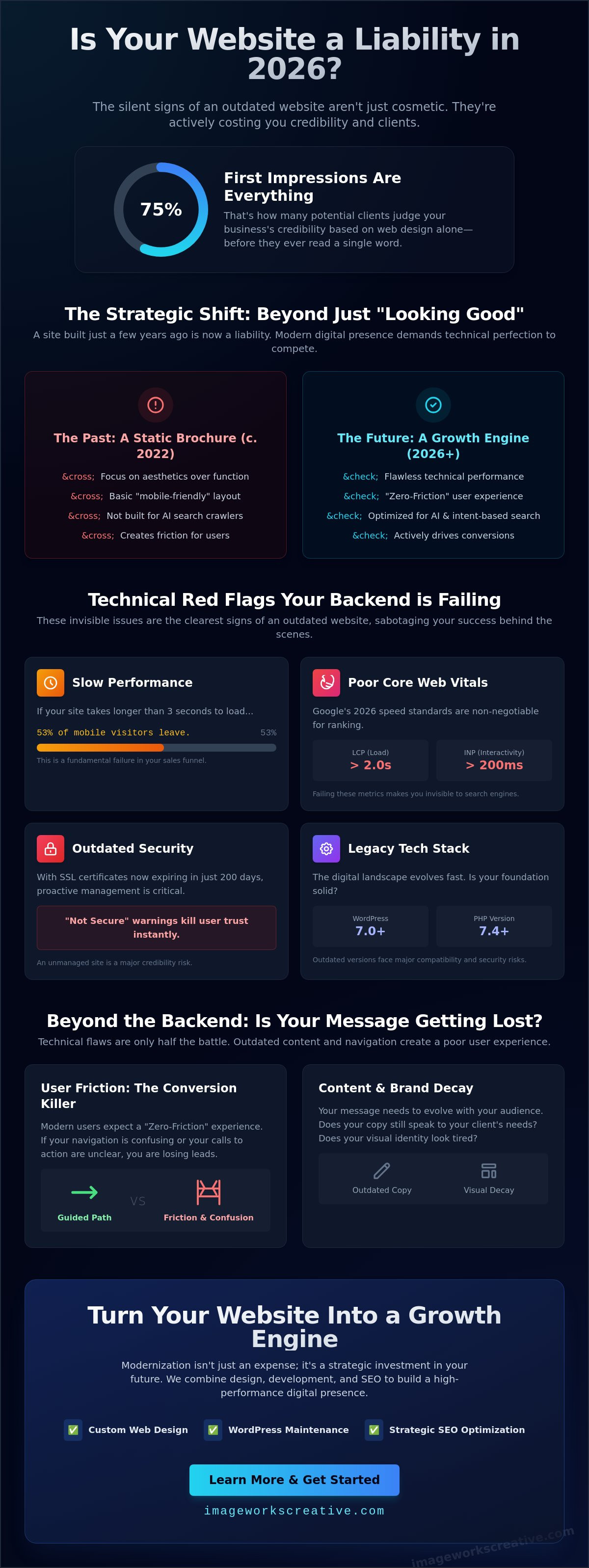
75% of your potential clients judge your business credibility based on your design before they ever read a single word. It's a sobering reality in 2026. You probably feel the impact through declining lead quality or high bounce rates while your competitors launch sleeker, more intuitive experiences. Identifying the signs of an outdated website is no longer just about aesthetics. It's about survival in an era where AI search engines and mobile-first users demand technical perfection.
We understand the frustration of seeing your hard-earned traffic vanish because of slow performance or an incompatible mobile layout. This article provides a clear roadmap to help you diagnose hidden technical flaws and understand the ROI of a modern digital strategy. We'll explore how high-level custom web design and proactive search engine optimization can turn a stagnant site into a strategic growth engine. You will gain a comprehensive 15-point audit checklist and the evidence needed to show stakeholders why modernizing is the only way to stay competitive.
Key Takeaways
- Recognize how a site built in 2022 can quickly become a strategic liability in the 2026 digital landscape.
- Spot technical red flags like slow performance and plugin bloat that often require expert WordPress Development & Maintenance.
- Move beyond simple navigation to a "Zero-Friction" experience that guides users toward conversion without hesitation.
- Audit the signs of an outdated website by identifying visual decay and copy that no longer speaks to your client's needs.
- Learn how to transform your site from a static project into a high-performance engine through Custom Web Design.
Beyond the Look: How 2026 Redefines an Outdated Website
Your website is no longer just a digital business card. It's an active participant in your sales team. Many business owners assume that if their site looks "clean," it's doing its job. This is a dangerous misconception. In 2026, the most prominent signs of an outdated website are often invisible to the naked eye. They hide in the code, the site structure, and the lack of alignment with how modern buyers actually make decisions. If your digital presence isn't actively driving revenue, it's likely standing in the way of it.
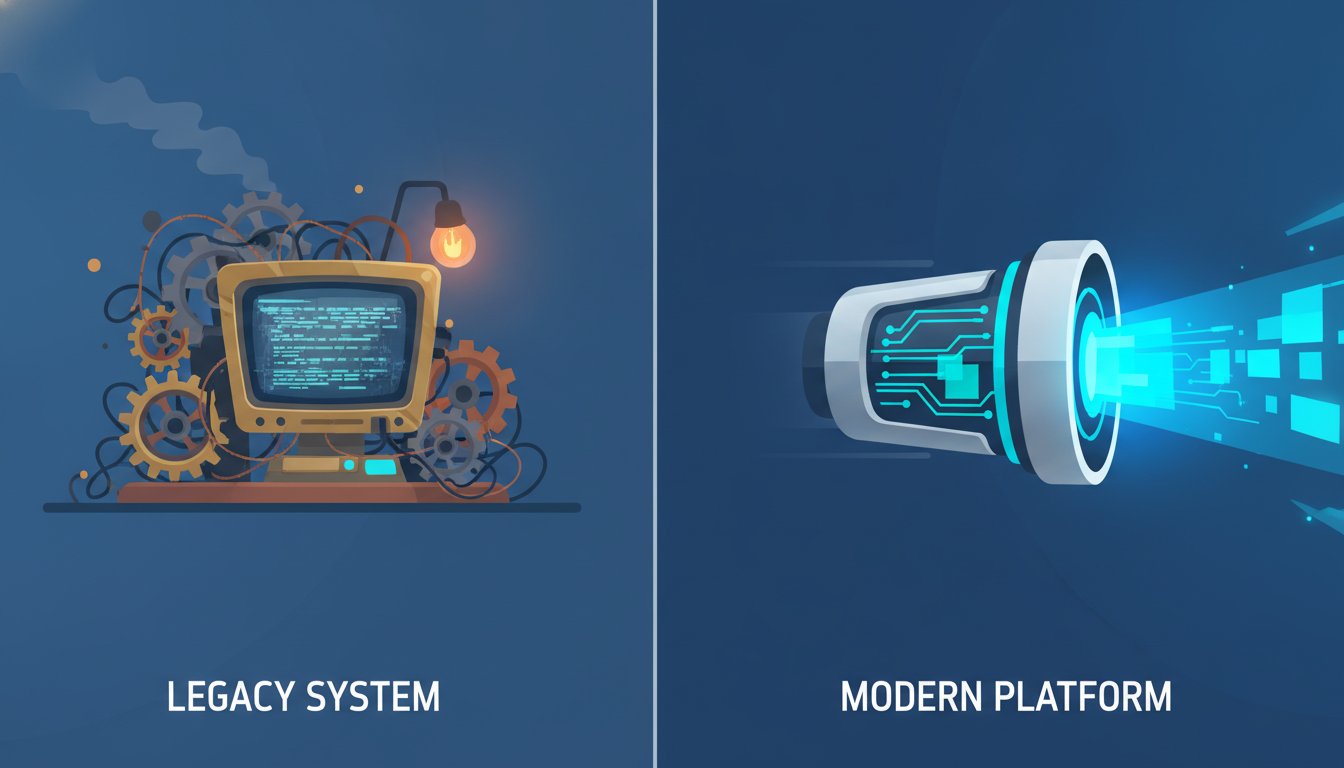
A site built in 2022 was designed for a world before generative AI search and the total dominance of "zero-friction" user expectations. Back then, having a pretty layout was enough. Today, that same site is likely a strategic liability. It doesn't just look old; it actively blocks your growth by failing to communicate with the algorithms that now control the majority of global web traffic. We believe in Strategic Synergy. This is our philosophy that your brand identity, technical performance, and visibility must function as a single, high-caliber unit to achieve real-world results.
An outdated website is any digital presence that creates friction for either a human user or an AI search crawler.
The Aesthetic vs. Strategic Performance Gap
Visual appeal is only the surface. You can have a beautiful site that still fails to convert because it operates like a static brochure. Modern users expect interactive, conversion-focused hubs. They need a clear visual hierarchy that guides them through a specific decision-making process. If your site lacks these strategic touchpoints, it's a relic. Maintaining this level of performance requires more than just occasional updates. It demands comprehensive website maintenance and hosting services to ensure your backend supports your front-end promises.
AI Search Compatibility: The New Baseline
Search engines have evolved. They no longer just look for keywords; they "read" for intent and authority to feed AI-powered overviews. If your site structure is fragmented or lacks structured data, these algorithms will ignore you. Most sites from just a few years ago weren't built with the technical clarity AI requires. While Responsive web design is now a standard, the way that code is interpreted by machines has shifted significantly. Without a sophisticated SEO optimization plan, your site remains invisible to the very tools your customers use to find solutions. This technical gap is one of the clearest signs of an outdated website in the current market.
Technical Red Flags: Signs Your Backend is Holding You Back
Your website’s backend is the engine of your digital presence. If it's sluggish, your business stalls. Slow page load times are the most immediate indicator of technical debt, often caused by years of "plugin bloat" or unmaintained legacy code. These invisible anchors drag down performance and frustrate users. Every second of load time correlates directly to a measurable drop in conversion rates. When your site takes longer than three seconds to load, 53% of mobile visitors will simply walk away. This isn't just a minor inconvenience. It's a fundamental failure in your sales funnel.
Security is another non-negotiable factor. As of March 15, 2026, the industry has shifted to shorter SSL/TLS certificate lifespans, with a maximum validity of only 200 days. If your hosting environment isn't managed by experts who stay ahead of these shifts, your site risks "Not Secure" warnings that kill credibility instantly. With the release of WordPress 7.0 in May 2026, legacy sites running on outdated PHP versions (below 7.4) also face significant compatibility and security risks. These technical gaps are among the most dangerous signs of an outdated website because they quietly erode trust before a customer even sees your work.
Core Web Vitals and Modern Speed Standards
Google’s 2026 speed expectations are precise. To rank well, your Largest Contentful Paint (LCP) must be under 2.0 seconds, and your Interaction to Next Paint (INP) must stay below 200 milliseconds. These metrics measure how fast your site feels to a real human. If your current website maintenance and hosting services aren't optimized for these specific thresholds, you are essentially invisible to search engines. Speed is no longer a luxury; it's a core ranking signal.
The Evolution of Fluid Responsiveness
A "mobile-friendly" site from 2021 is likely failing today. Modern standards require fluid responsiveness, meaning your site must adapt perfectly to foldable phones and ultra-high-resolution monitors alike. Professional service firms must adopt a mobile-first approach to meet the 64% of global traffic coming from handheld devices. Reviewing the signs it's time for a website overhaul can help you identify if your layout is frustrating your most valuable mobile leads. High-performance design ensures your brand looks exceptional on every screen. If you're ready to modernize your digital engine, let's grow your brand with a strategy built for 2026.
User Friction: Signs Your Navigation is Costing You Leads
Navigation is your brand's silent ambassador. It should guide, not confuse. When a visitor lands on your site, they arrive with a specific intent. If your menu feels like a labyrinth, they won't stick around to solve it. One of the most glaring signs of an outdated website is the presence of "Dead-End" pages. These are sections of your site where the content simply stops without a clear next step. Every page must be a bridge to the next stage of the customer journey. If you aren't providing a logical path forward, you're essentially showing your leads the exit.
The old "Three-Click Rule" is dead. In 2026, we've moved toward a "Zero-Friction" expectation. Users don't count clicks; they measure effort. If they have to hunt for your contact information or decipher "Mystery Meat Navigation"—those overly clever labels like "The Odyssey" instead of "Our Process"—they will leave. Clear, descriptive labels are the hallmark of a high-performance site. Clarity beats cleverness every time. Broken internal links and non-functional search bars are more than just technical glitches. They are trust killers that signal a lack of attention to detail.
Modern Sitemaps vs. Legacy Bloat
Is your sitemap a disorganized junk drawer? Legacy sites often accumulate hundreds of thin, redundant pages over the years. This bloat confuses both human visitors and the AI crawlers we discussed earlier. Modern B2B and professional services require a lean, intentional user journey. We focus on streamlining navigation to prioritize high-value conversion points. A bespoke sitemap should feel like a curated experience, leading the user naturally from the initial problem to your unique solution.
Accessibility as a Performance Metric
Accessibility is no longer an optional "extra" for your digital presence. It's a core requirement for building trust and maintaining a professional reputation. If your site fails to meet the Web Content Accessibility Guidelines, you are excluding a significant portion of your potential audience. Signs of decay include poor color contrast, lack of keyboard navigation, or missing alt-text for images. These aren't just ethical oversights; they are technical signs of an outdated website that can negatively impact your SEO performance. A truly modern site is inclusive by design, ensuring a seamless experience for every user, regardless of how they interact with the web.
Content and Authority: Signs Your Brand Identity Has Lost Its Edge
Your message matters. If your writing sounds like a corporate monologue, your audience will tune out. One of the most subtle signs of an outdated website is "Me-Centric" copy. This is content that focuses entirely on your company's history and accolades while ignoring the actual pain points of your modern clients. High-touch firms in the legal, medical, and tech sectors often fall into this trap. They talk at the visitor instead of inviting them into a partnership. If your home page doesn't immediately address the specific challenges your clients face in 2026, you're losing leads to competitors who do.
Visual decay is equally damaging. We've all seen the generic "smiling headset lady" or the corporate handshake stock photos from 2010. These images don't just look old; they scream that your business is out of touch. Modern users crave authenticity. They want to see real people, real offices, and real results. Even the most technically sound site will fail if the imagery feels staged or dated. You'll also find that brand identity design services from a previous era can make even a new site feel old. If your logo and color palette are relics of a previous decade, no amount of new code can hide that lack of evolution.
The Missing Trust Indicators of Modern Firms
Static awards logos from 2018 don't build authority anymore. In an era of AI-generated noise, you need "Human-First" content to stand out. Modern trust signals include video testimonials, live case studies, and dynamic achievement markers that update in real-time. These elements prove you're an active, thriving partner in your client's success. If your "Latest News" section hasn't been touched since 2023, you aren't just quiet; you look closed for business. We help B2B and professional services firms integrate these high-caliber trust signals to ensure their authority is undeniable.
Outdated SEO Strategy: Keyword Stuffing vs. Intent
Is your content written for a 2015-era search engine? If you're still stuffing keywords into every paragraph, you're hurting your rankings. Google's 2026 algorithms prioritize E-E-A-T: Experience, Expertise, Authoritativeness, and Trustworthiness. They look for depth and genuine insight that helps a human reader. This shift is why you need a professional seo agency to audit your current content strategy and align it with modern search intent. If you're ready to stop guessing and start growing, let's grow your brand with a content strategy that actually converts.
Strategic Modernization: Turning Your Website into a Growth Engine
Stop thinking of your website as a project with a start and end date. In 2026, the most successful firms embrace a "continuous growth" mindset. If you view your digital presence as a static entity, you’re already falling behind. A website redesign is an investment in your firm’s future scalability, not a one-time expense. It’s about building a foundation that evolves as your business grows. We believe in a collaborative approach to digital transformation, where your deep industry knowledge meets our technical proficiency to create something exceptional.
True power comes from the synergy between bespoke design and high-performance marketing. Your site must do more than just attract eyes. It needs to integrate seamlessly with your CRM and lead-tracking tools to provide a clear, data-driven picture of your success. When your design, SEO, and sales tools function as a single unit, you eliminate the friction that causes leads to slip through the cracks. Ignoring these integrations is one of the most significant signs of an outdated website that is actively costing you revenue.
Building for Longevity with Professional WordPress Development
Choosing a wordpress development agency ensures you have the flexibility to adapt to whatever the next decade brings. WordPress remains the premier choice because it balances user-friendly management with immense technical power. We leverage the perfect blend of AI intelligence and human expertise to build sites that are both efficient and deeply authentic. This strategy future-proofs your site, allowing it to scale alongside your ambitions without requiring a total rebuild every three years.
The ROI of a Modernized Digital Presence
The cost of doing nothing is higher than many executives realize. Every month you maintain a lagging site, you face brand erosion and a steady stream of lost opportunities. A faster, cleaner site directly impacts your local growth plans by improving your visibility in map rankings and increasing your conversion rates. Modernizing isn't just about fixing the signs of an outdated website. It's about reclaiming your competitive edge and ensuring your brand remains a leader in your field. Your next step is a comprehensive digital audit to identify the hidden red flags we've discussed and chart a clear path toward modernization.
Secure Your Digital Future
The digital landscape of 2026 moves at a breakneck pace. Identifying the signs of an outdated website isn't just about catching visual decay. It's about closing the gap between your current performance and your firm's true potential. We've explored how technical debt, fragmented navigation, and stagnant brand identity can quietly sabotage your lead quality. By shifting from a "one-time project" mindset to a strategy of continuous evolution, you ensure your business remains authoritative and visible to both human leads and AI search engines.
ImageWorks Creative has been an award-winning partner for growth since 1997. We specialize in engineering bespoke solutions for the medical, legal, and tech sectors through a collaborative, data-driven approach to design. We don't just build sites; we create high-performance engines engineered to scale with your ambitions. It's time to stop letting your backend hold you back and start building for the next decade of success.
Ready to modernize? Partner with ImageWorks Creative for a bespoke website that drives growth.
Frequently Asked Questions
How often should a business website be redesigned?
A website that is more than four years old and hasn't had a major update is likely outdated. The pace of digital evolution between 2022 and 2026 has been unprecedented. While regular updates help, a strategic overhaul every few years ensures your technology and brand identity remain competitive in an AI-driven market.
Can an outdated website hurt my SEO rankings even if the content is good?
Yes, technical performance is now a direct ranking signal that can override high-quality content. Google's 2026 standards require a Largest Contentful Paint (LCP) of under 2.0 seconds. If your site is sluggish or structurally fragmented, search engines will treat it as a liability. This is one of the most critical signs of an outdated website that business owners often overlook.
What is the difference between a website refresh and a full redesign?
A refresh focuses on visual "skin" updates like new fonts or colors, while a redesign rebuilds the underlying architecture. Think of a refresh as a new coat of paint on an existing structure. A redesign involves gutting the plumbing and electrical to meet modern standards. For firms with significant technical debt, a full custom web design is the only way to ensure long-term growth.
Is it possible to fix a slow website without a full relaunch?
You can achieve incremental speed gains through optimization, but it's often a temporary fix for a deeper problem. Cleaning up plugin bloat or switching to high-performance website maintenance and hosting services can help. However, if your core code is legacy PHP or lacks modern structural data, you'll eventually hit a performance ceiling that only a new build can break.
How do I know if my website is mobile-first or just mobile-friendly?
Mobile-friendly sites are desktop designs that shrink to fit a screen; mobile-first sites are engineered for handheld devices from the start. With 64% of global traffic now coming from mobile, a site that just "fits" isn't enough. A truly modern experience prioritizes touch-friendly navigation and lightning-fast delivery for users on the go.
What are the most common signs of an outdated website for professional service firms?
For legal, medical, or tech firms, the most common indicators include "Me-Centric" copy and a lack of real-time trust signals. If your site focuses on your history instead of client pain points, it feels like a relic. High-touch firms need a B2B and professional services strategy that emphasizes authority and zero-friction lead generation.
Why is accessibility so important for modern website design?
Accessibility ensures your brand is inclusive and compliant with modern ethical and legal standards. It also directly improves your search performance. Search engines reward sites that are easy to navigate via keyboard or screen readers. Integrating these standards into your SEO optimization plan is essential for building trust with a diverse audience.
How much does a custom website redesign typically cost in 2026?
The cost of modernization depends entirely on your specific technical requirements and growth goals. Instead of viewing it as a fixed expense, consider the return on investment. A high-performance site pays for itself by capturing the high-value leads your current signs of an outdated website are driving away. We focus on bespoke solutions that align with your firm's unique scalability needs.