Brand Refresh Versus Redesign: Which One?
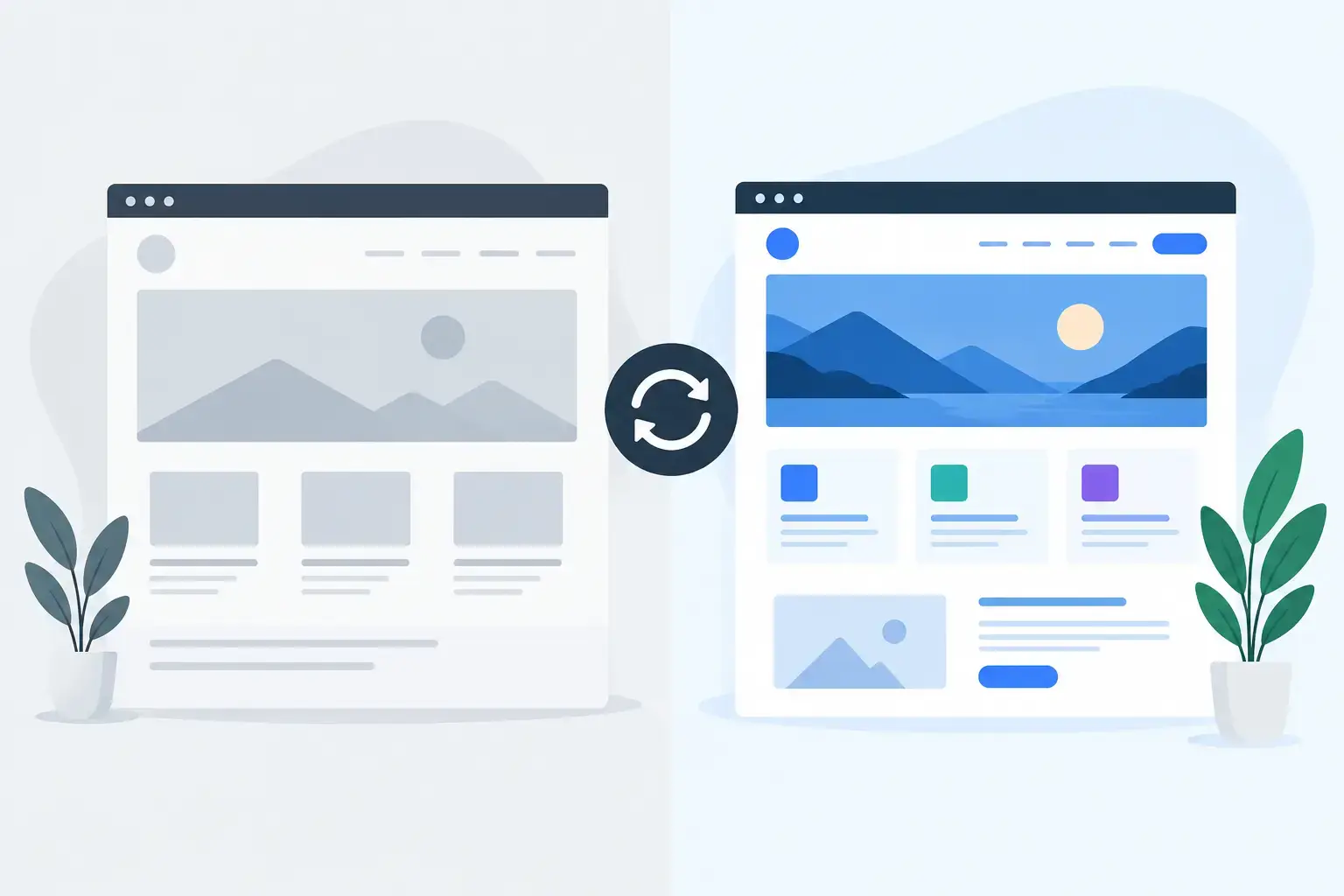
A dated website creates a business problem long before it becomes a design problem. Prospects notice weak messaging, confusing navigation, slow pages, stale content, and a visual style that no longer matches the quality of the company behind it. The brand refresh versus redesign decision is about choosing the right level of change, not automatically choosing the biggest project.
A refresh can make a capable website look current and work harder. A redesign can correct deeper problems in strategy, content, structure, technology, and user experience. The right answer depends on what is actually holding the site back.
Brand Refresh Versus Redesign: The Core Difference
A brand refresh updates how your company presents itself without changing its fundamental identity. It may include a refined logo, updated color palette, new typography, stronger photography, revised messaging, and more consistent use of visual elements. On a website, it often means a new homepage design, updated key page templates, and a cleaner presentation of the content that already exists.
A redesign is more structural. It rethinks how the website is organized, what it needs to communicate, how visitors move through it, and what technical foundation supports it. A redesign may involve revised positioning, new content architecture, rewritten service pages, conversion paths, platform work, accessibility improvements, and custom design across the site.
Put simply: a refresh improves the expression of your brand. A redesign improves the website's ability to represent and support the business.
That distinction matters because many companies ask for a new look when their real issue is a weak website strategy. A polished coat of paint cannot fix unclear service offerings, a buried call to action, or a site built around the company's internal organization rather than a buyer's questions.
When a Brand Refresh Is the Better Choice
A refresh makes sense when your business is fundamentally well positioned and your website structure still supports how people evaluate and contact you. The site may look several years behind, but visitors can find what they need, core pages are accurate, and the platform is stable and maintainable.
For example, a professional services firm may have a sound site structure with clear practice-area pages and useful case material, yet still look generic because it relies on stock layouts, inconsistent type, and dated imagery. The firm may not need to tear up its navigation or rewrite every page. It may need a more distinctive visual system and a homepage that quickly establishes expertise, relevance, and trust.
A homepage-first refresh is often a smart middle ground. The homepage sets the visual and strategic direction for the rest of the site. Updating it can clarify the company story, improve the visitor journey, and establish design standards that can be carried into other priority pages over time.
A refresh is also appropriate after a meaningful business change that does not require a complete repositioning. You may have expanded into a new market, added a service line, modernized your facilities, or sharpened your target audience. If the existing website can accommodate the change, targeted updates may offer better value than a full rebuild.
This approach works best when someone is also responsible for ongoing maintenance. A newly refreshed site still needs updates, backups, security monitoring, performance attention, and periodic content improvements. Without that discipline, even good work slowly becomes outdated again.
Signs You Need a Website Redesign Instead
A redesign is warranted when the site has problems that are deeper than appearance. The clearest signal is misalignment: the website does not reflect how the business sells, operates, or competes today.
If your company has evolved but the website still speaks to an old audience, uses outdated terminology, or gives equal weight to services that no longer matter, a refresh may simply make the wrong message look better. Start with strategy and content before design.
Navigation is another tell. When visitors must hunt for basic information, when service pages overlap or compete with each other, or when the site has grown into an unplanned collection of pages, the structure needs work. Good design helps visitors make decisions. It cannot do that reliably when the underlying information architecture is confused.
Technical condition also matters. An unsupported platform, neglected WordPress plugins, outdated Drupal modules, poor mobile performance, recurring security issues, or an unreliable host can justify a more substantial project. Sometimes the best business decision is a redesign combined with a stable maintenance plan. Other times, the codebase is sound and a focused improvement plan is enough.
Consider a redesign when the current site has four or more of these issues:
- Your positioning, services, or target market has changed significantly.
- The site is difficult to update, insecure, slow, or built on aging technology.
- Visitors struggle to find services, proof, locations, or contact paths.
- Key pages are thin, duplicated, outdated, or written for an old sales process.
- The design looks like a template and fails to distinguish you from competitors.
- The site does not support the marketing, recruiting, sales, or customer-service work it is expected to do.
No template is automatically a problem, and no custom website is automatically effective. But generic templates often force businesses into the same visual patterns, content blocks, and page structures as everyone else. That is a poor fit for organizations that need to establish expertise, explain complex services, or win higher-value work.
Do Not Let Design Lead the Entire Decision
The most common mistake is beginning with colors, layouts, and competitor screenshots. Those inputs are useful, but they should not drive the project alone.
Start with the business questions. Who needs to trust you? What do they need to understand before contacting you? Which services or industries matter most? What proof reduces hesitation? What should a visitor do next? The answers shape the content and structure. Then design gives those answers clarity, hierarchy, and credibility.
At ImageWorks Creative, that order is intentional: strategy, content, structure, then custom design. It prevents a familiar failure mode in web projects: approving attractive page concepts only to discover later that the content does not fit, the navigation is incomplete, or the lead path is weak.
AI can help with early research, planning, and wireframing, but it does not replace business judgment or experienced design. AI-generated sites can be useful for a temporary landing page or a simple early-stage business. For established organizations, the risks are usually sameness, shallow messaging, and a site that looks plausible without clearly representing what makes the company credible.
Cost, Scope, and the Risk of Overbuilding
A refresh generally costs less and moves faster because it preserves more of the existing site. That makes it attractive when the website has a solid foundation. But a low initial scope can become expensive if it avoids necessary decisions and leaves underlying issues untouched.
A redesign requires more investment because it involves discovery, content decisions, architecture, design, development, testing, and launch planning. It also creates a chance to fix problems that have been accumulating for years. The value is not in having more pages or more animation. It is in building a site that better supports credibility, usability, leads, and ongoing improvement.
Avoid both extremes. Do not rebuild a functioning website solely because a new executive dislikes the color palette. But do not keep patching a weak foundation because a full redesign feels inconvenient. The best scope is the one that addresses real business friction without adding unnecessary complexity.
For some organizations, that means redesigning the homepage and highest-value service pages now, then improving the rest through an ongoing plan. For others, especially businesses with major positioning, platform, or content issues, a complete rebuild is more efficient than years of disconnected fixes.
Make the Decision With Evidence
Opinions about design are inevitable. Evidence makes them more useful. Review analytics to see which pages attract attention and where visitors leave. Look at form and call activity, search terms, heatmaps where available, mobile behavior, page speed, support requests, and feedback from the sales team. A website should be evaluated by how well it communicates and supports real business activity, not just whether it feels modern.
Also assess what can be preserved. Strong content, useful resource pages, sound technical components, and well-performing service pages may deserve improvement rather than replacement. A redesign does not mean discarding everything. A refresh does not mean avoiding meaningful change.
The right project gives your website a clearer job and a realistic path to stay current. If the foundation is sound, refresh it with purpose. If the foundation is weak, redesign it around the business you are now - then maintain and improve it before the next rebuild becomes inevitable.

