What Makes Websites Trustworthy to Buyers?
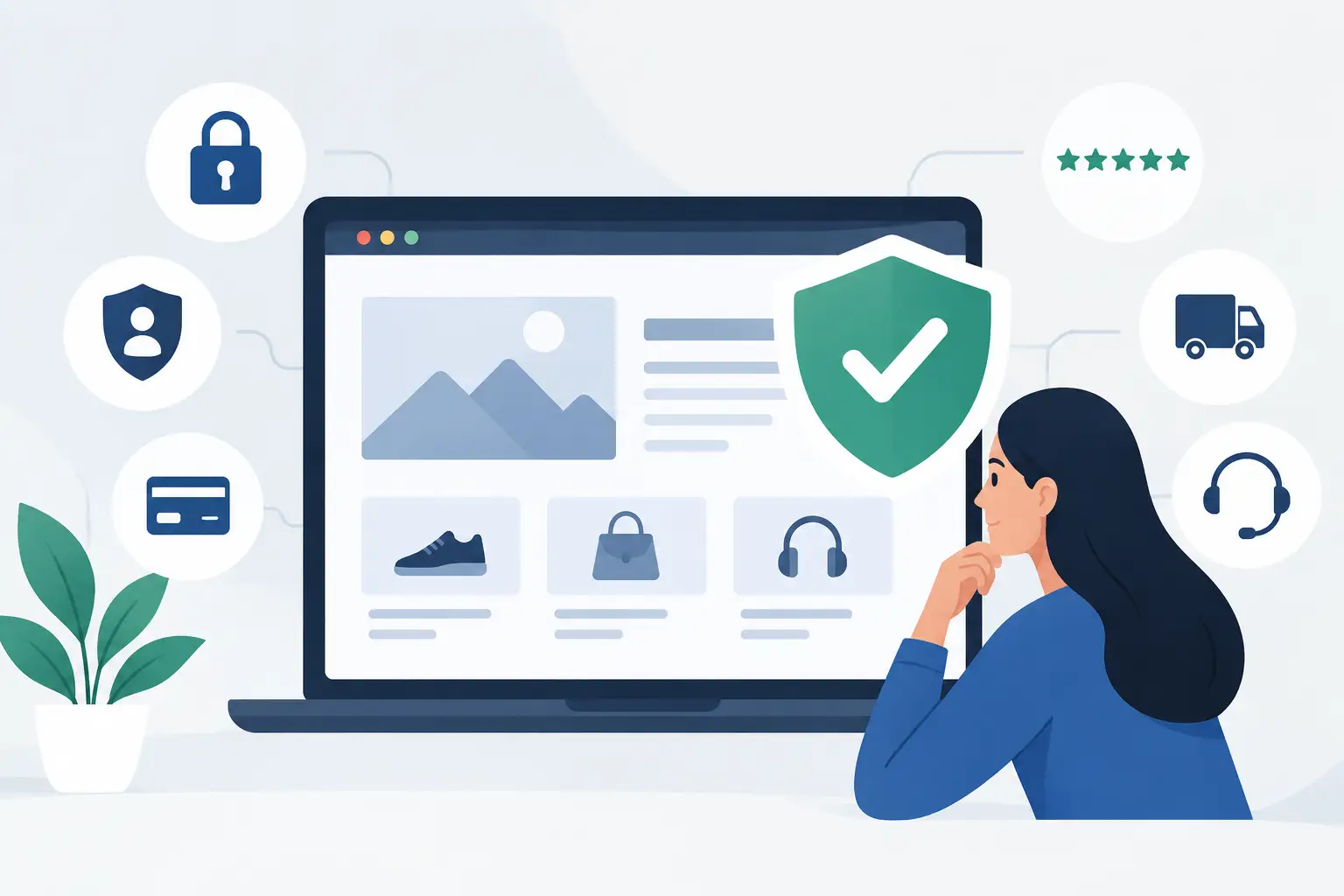
A prospective customer may spend less than a minute deciding whether your company feels credible. They notice the dated logo, unclear headline, stock-photo handshake, broken mobile layout, or form that looks like it has not been touched in five years. Then they leave - often before your sales team has a chance to make its case.
What makes websites trustworthy is not one badge, testimonial, or security seal. Trust is the cumulative result of clear communication, credible evidence, thoughtful design, reliable technology, and an experience that respects the visitor's time. For established businesses, that standard matters because the website is often the first serious sales conversation.
What Makes Websites Trustworthy? Clarity Comes First
A trustworthy website tells visitors, quickly and plainly, what the business does, who it serves, and why it is qualified to help. This sounds basic, but many websites lead with vague slogans, internal language, or generic claims such as “innovative solutions.” Those phrases force buyers to work too hard.
A construction firm should make its project types, service area, capabilities, and process easy to understand. A healthcare practice should explain its specialties, providers, locations, and appointment options without sending patients through a maze. A government contractor needs to communicate relevant expertise, contract vehicles, certifications, and differentiators without burying the useful information in a dense capabilities statement.
The homepage has an especially important job. It should establish the brand, orient the visitor, and create a logical path to deeper information. It does not need to say everything. It does need to say the right things clearly.
Specific Claims Beat Broad Promises
Trust increases when claims can be understood and evaluated. “Serving commercial HVAC systems across Northern Virginia” says more than “Your trusted comfort partner.” “Custom WordPress and Drupal websites for complex organizations” is more useful than “We build digital experiences.”
That does not mean every page should read like a technical specification. Good content combines a clear value proposition with enough detail to prove the company understands the buyer's problem. The right amount depends on the sale. A local service business may need fast answers and an easy way to call. A B2B firm with a longer sales cycle may need service detail, case examples, process explanations, and resources that support internal decision-making.
Design Signals Whether the Business Takes Itself Seriously
Visitors make fast visual judgments. An inconsistent logo, cramped type, awkward spacing, dated photography, and generic page layouts can make a capable company look less established than it is. That is unfair, but it is real.
Custom design is not about decoration for its own sake. It gives a business the ability to present its actual personality, strengths, and priorities instead of looking like dozens of competitors using the same template. A well-built design system also creates consistency as the site grows. Buttons behave the same way, headings follow a hierarchy, service pages have a recognizable structure, and the brand feels intentional from page to page.
Templates can be a reasonable starting point for a new company with a limited budget, a simple offer, and little need to stand apart yet. The trade-off is that templates often encourage familiar layouts, generic visual choices, and compromises that become more visible as the business matures. The same concern applies to AI-generated websites. AI can help with research, content planning, wireframing, and early exploration. But a polished business website still requires experienced judgment about brand, hierarchy, usability, messaging, and the details that distinguish one company from another.
No templates and no AI-clone design is not a matter of style preference. It is about avoiding a website that makes a serious company appear interchangeable.
Proof Must Be Easy to Find and Easy to Believe
Businesses often have strong credentials but present them poorly. A trustworthy website places meaningful proof near the decisions visitors are being asked to make.
For some companies, proof means licensed professionals, provider biographies, certifications, affiliations, project experience, or regulatory information. For others, it means detailed case studies, recognizable client categories, manufacturing capabilities, years in business, or clear descriptions of how the work is performed. Testimonials can help, particularly when they include enough context to sound like a real customer rather than a polished slogan.
The key is relevance. A list of logos may create a quick impression, but it does not explain what your company accomplished. A short project story that identifies the challenge, scope, approach, and outcome is usually more persuasive. Avoid inflated claims that cannot be supported. Buyers are alert to vague superlatives, especially in professional services and high-consideration purchases.
Real People Reduce Perceived Risk
Anonymous businesses feel riskier. Showing leadership, subject-matter experts, sales contacts, clinicians, or project managers can make the organization feel more accountable. The photographs should be professional and current, but they do not need to look overly staged.
This is particularly valuable when the buyer is choosing a firm for a long-term relationship. They want to know who will answer the phone, lead the work, and stand behind the recommendation.
Usability Is a Trust Issue, Not Just a Design Issue
A website can look excellent and still lose trust if it is difficult to use. Visitors expect navigation that makes sense, readable text, clear calls to action, pages that work on phones, and forms that do not ask for unnecessary information.
Slow pages are also a credibility problem. A site that hesitates, jumps around while loading, or fails on mobile creates doubt about the business behind it. Performance improvements should be balanced with design and content needs. For example, original photography and video can strengthen credibility, but oversized, unoptimized media can damage the experience. The right answer is not to remove every visual asset. It is to manage them properly.
Accessibility supports trust as well. Clear contrast, keyboard-friendly navigation, useful alternative text, descriptive form labels, and readable typography make the site more usable for more people. Accessibility requirements and priorities vary by organization, but basic accessible design is good business practice regardless.
A dependable content management platform helps maintain this standard. WordPress is often an excellent choice for marketing-focused websites that need flexible publishing and straightforward administration. Drupal can be a better fit for organizations with complex content models, multiple user roles, governance requirements, or integrations. Neither platform automatically creates trust. The quality of the strategy, design, development, hosting, and maintenance does.
Security and Accuracy Work Quietly in the Background
Visitors may not understand hosting architecture or software updates, but they recognize warning messages, broken forms, outdated copyright years, expired promotions, and pages that reference former employees. Small signs of neglect create larger doubts.
A secure HTTPS connection is table stakes. So are dependable hosting, software updates, backups, spam protection, and routine monitoring. These are operational responsibilities, not one-time launch tasks. A website that collects appointment requests, quote inquiries, or other customer information deserves particular care.
Accuracy matters just as much. Keep locations, phone numbers, service areas, staff details, pricing guidance, and business hours current. If advertising, Google Business Profile activity, SEO, or email campaigns point people to the website, the landing pages must match the promise that brought them there. Strong marketing cannot save a weak website, and a trustworthy website should not contradict the marketing around it.
Trust Is Built Through Ongoing Improvement
Many companies treat a redesign as a finish line. In practice, the best websites improve after launch. Analytics can show where users leave, which service pages attract qualified traffic, and whether calls and forms are producing useful inquiries. Heatmaps, call tracking, conversion tracking, search data, and sales feedback can reveal friction that subjective opinions miss.
That does not mean every data point requires a redesign. Sometimes the right move is a clearer homepage message, a better service page, updated photography, a shorter form, or stronger proof near a call to action. For a site with a sound technical foundation, incremental improvement is often more sensible than starting over.
At ImageWorks Creative, we see trust as a design, content, and marketing discipline rather than a visual layer added at the end. The strongest websites look credible because they are credible: they make useful promises, provide evidence, work reliably, and keep improving as the business does.
If your website makes visitors hesitate, start by identifying the reason for that hesitation. A clearer message, more distinctive design, stronger proof, or better upkeep may do more for confidence than another round of advertising ever could.

